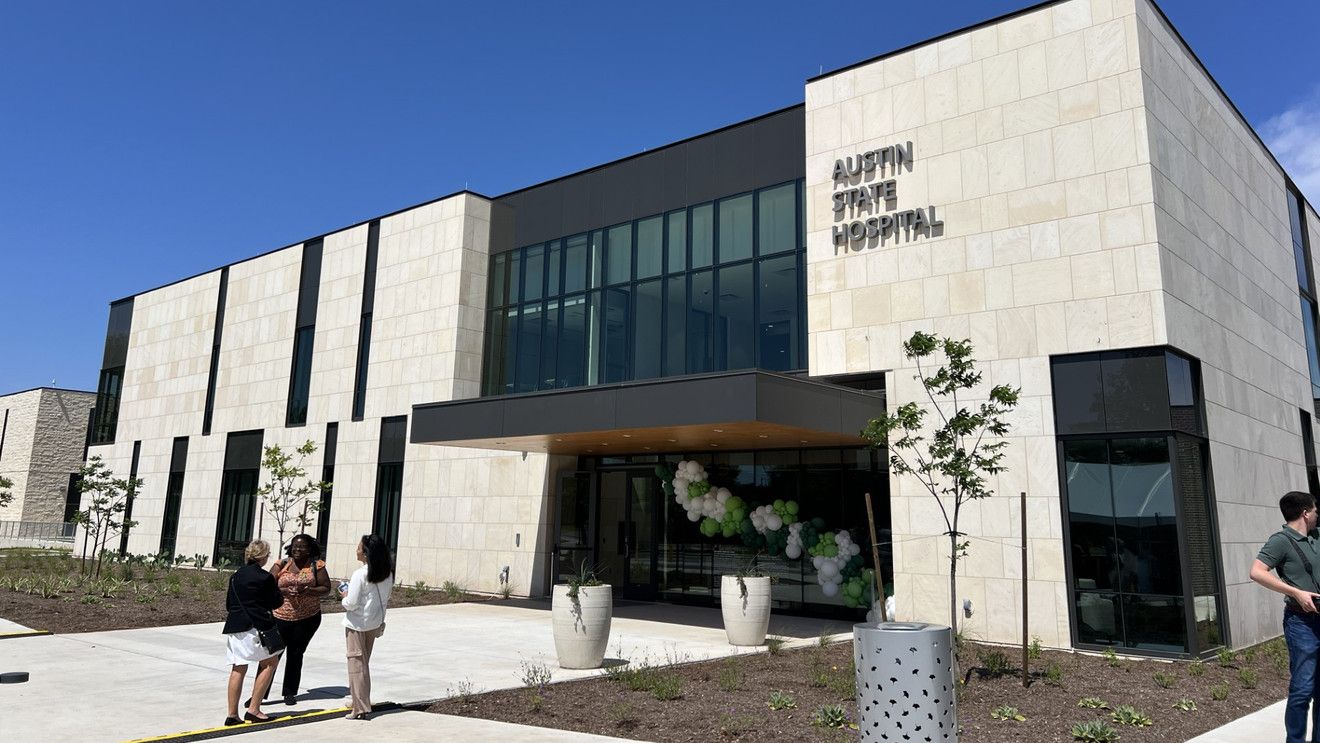
Hospital Volunteer Opportunities in Austin, TX: Start Here

No Author • April 24, 2026

Hospital Volunteer Opportunities in Austin, TX: What to Expect and How to Get Started

If you've been searching for hospital volunteer opportunities in Austin, TX, this guide gives you the complete picture. You'll learn exactly what to expect, how to qualify, and how Friends of A.S.H. connects community members to meaningful service at Austin State Hospital. Whether you have a few hours a week or a deep commitment to mental health care, there's a place for you here.


What Are Hospital Volunteer Opportunities at Austin State Hospital?


Hospital volunteer opportunities at Austin State Hospital aren't limited to administrative tasks or wayfinding assistance. Volunteers here play a hands-on role in supporting patients who rely on community connection as part of their recovery.


Austin State Hospital is a long-term psychiatric care facility serving individuals with serious mental illness. The National Alliance on Mental Illness recognizes consistent community support as a meaningful factor in psychiatric recovery and patient well-being. Many patients at ASH spend months, sometimes years, in treatment, and the presence of caring volunteers has a real effect on their sense of dignity, belonging, and hope.


Friends of A.S.H. (the Volunteer Services Council of Austin State Hospital Inc.) has partnered with the hospital for over 70 years to coordinate volunteer programs and direct patient support initiatives. The organization bridges the gap between what state funding can provide and what patients actually need to thrive. Think access to computers, clothing, dental care not covered by insurance, and social services within the broader Austin community.


This isn't a passive volunteering experience. It's direct, purposeful service with a population that genuinely benefits from your presence.


Step-by-Step: How to Become a Hospital Volunteer in Austin, TX


Getting approved as a hospital volunteer in Austin is a straightforward process once you know what's involved. Here's how it works from start to first shift.


Step 1: Submit Your Volunteer Application


Begin by completing a volunteer application through Friends of A.S.H. or directly through Austin State Hospital's Community Relations department. The form collects your availability, areas of interest, any relevant skills, and basic personal information.


Step 2: Pass a Background Check


All hospital volunteers in Austin are required to complete a background screening before working with patients. This is standard for any healthcare setting. Processing typically takes one to two weeks.


Step 3: Attend a Volunteer Orientation


Once your background check clears, you'll be invited to a required orientation session. This covers hospital policies, patient interaction guidelines, confidentiality requirements, and specific protocols for working in a psychiatric care environment. It's also a chance to ask questions before your first shift.


Step 4: Start With Supervised Shifts


New hospital volunteers begin with supervised service to get comfortable with the environment and build rapport with patients. This phase protects everyone involved and sets you up for a more confident, rewarding experience.


Step 5: Commit to a Consistent Schedule


Most hospital volunteer opportunities at Austin State Hospital ask for a minimum time commitment each month. Consistency matters enormously in this setting. Patients form trust with familiar faces, and reliability is one of the most valuable things you can offer.


What to Expect as a Healthcare Volunteer in Austin


Volunteering in a psychiatric hospital is different from most other volunteer environments. It requires patience, genuine empathy, and an ability to show up without an agenda.


As a healthcare volunteer at Austin State Hospital, your day-to-day responsibilities might include:

  • Facilitating recreational activities or arts programs
  • Assisting with patient community outings and integration events
  • Distributing donated clothing, hygiene items, or personal care products
  • Supporting staff during scheduled patient enrichment sessions
  • Helping coordinate major annual events like the Insights Art Show or the Bunny Run


You won't be providing clinical care. Licensed staff handle all medical and therapeutic responsibilities. Your role is to be a reliable, compassionate presence that connects patients to the world outside the hospital walls.


SAMHSA's Office of Recovery identifies community including relationships and social networks that provide support, friendship, and hope as one of the four core dimensions of mental health recovery. Every shift you show up for contributes directly to that. 


Many volunteers describe their first few shifts as unexpectedly moving. You come in ready to give something and often find the experience returns something to you as well. That exchange is part of what makes mental health volunteer opportunities in Austin different from most other community service options.


Local Hospital Volunteer Opportunities Near You


If you've been looking for local hospital volunteer opportunities in Austin or the surrounding Central Texas area, Austin State Hospital stands out as one of the few facilities where community members can volunteer directly with long-term psychiatric patients.


Most general hospitals limit volunteer roles to administrative support, patient transport, or gift shop assistance. Austin State Hospital, through its partnership with Friends of A.S.H., offers something more direct: genuine community engagement with a population that often has very limited outside contact.


Residents of Austin, Cedar Park, Round Rock, Pflugerville, and Dripping Springs are all within a reasonable distance to serve regularly. There's no need to search far for meaningful healthcare volunteer opportunities when this program exists in your own backyard.

For a broader look at how this type of service creates lasting community impact, the real impact of healthcare volunteer opportunities blog post is worth reading before you apply.


How Friends of A.S.H. Connects You to Hospital Volunteer Programs


Friends of A.S.H. serves as the direct link between the Austin community and the patients of Austin State Hospital. The organization coordinates all volunteer activity, manages fundraising efforts, runs patient enrichment events, and funds programs that fall outside the state budget but remain essential to patient well-being.


When you commit to hospital volunteer opportunities through Friends of A.S.H., you're not navigating a large institutional process on your own. The team helps match your availability and skills to the right roles, walks you through orientation, and connects you with an active community of volunteers who share your values.


Understanding the full scope of patient support programs for mental health can help you decide where your time and energy will create the most meaningful impact. Some volunteers gravitate toward event-based roles. Others prefer recurring weekly visits. Both matter. 

The organization's 70-year track record with Austin State Hospital reflects a commitment that goes well beyond annual fundraising campaigns. It's sustained, community-driven support built on relationships.


Your Next Step Starts With One Application


Hospital volunteering at Austin State Hospital isn't just giving a few hours a week. It's choosing to show up for people who often have very few consistent people in their corner. Friends of A.S.H. handles the coordination, training, and logistical support so you can focus entirely on the people you're there to serve.


If you've been looking for hospital volunteer opportunities in Austin that actually matter, this is where to start. The application process is accessible, the team is supportive, and the impact is real.


Apply to volunteer with Friends of A.S.H. today and take the first step toward becoming part of something genuinely worthwhile.


Frequently Asked Questions


1.How do I become a hospital volunteer in Austin, TX?


Start by submitting a volunteer application through Friends of A.S.H. or Austin State Hospital's Community Relations department. From there, you'll complete a background check, attend a mandatory orientation session, and begin supervised shifts before settling into a regular schedule. Most applicants move from application to first shift within two to four weeks.


2.What are the requirements to volunteer at a hospital in Austin?


Volunteers are generally required to be 18 or older, pass a background screening, and complete a volunteer orientation. Austin State Hospital also requires adherence to strict patient confidentiality standards. Some roles may have additional requirements depending on the nature of the activities involved.


3.What do hospital volunteers do at Austin State Hospital?


Volunteers support patient enrichment activities, assist with recreational programs, help distribute donated goods, and participate in events organized through Friends of A.S.H. They don't provide clinical services. Their primary contribution is being a consistent, compassionate presence for patients receiving long-term psychiatric care.


4.How long does it take to get approved as a hospital volunteer?


The full approval process typically takes two to four weeks. This includes background check processing, orientation scheduling, and any initial training required before beginning supervised shifts. Timelines can vary slightly based on application volume and availability.


5.What is the application process for hospital volunteer programs?


The process involves four stages: submitting an application, completing a background check, attending a volunteer orientation, and starting with supervised service shifts. Friends of A.S.H. guides you through each stage and helps match your skills and schedule to the most appropriate volunteer roles available.


Key Takeaways


  • Hospital volunteer opportunities at Austin State Hospital are open to community members across Central Texas, including residents of Austin, Pflugerville, Cedar Park, Round Rock, and Dripping Springs.
  • The approval process has four clear steps: application, background check, orientation, and supervised shifts. Most volunteers complete it within two to four weeks.
  • Volunteers in this setting don't provide clinical care. Their role centers on patient enrichment, resource distribution, and consistent community presence.
  • Consistency is the most valuable thing a hospital volunteer can offer. Patients benefit most from familiar, reliable faces over time.
  • Friends of A.S.H. coordinates all volunteer activity and funds programs like clothing access, dental care, and computers that state budgets don't cover.
  • Volunteering through Friends of A.S.H. connects you to a 70-year legacy of community-driven mental health support at Austin State Hospital.

Five people in a bright office lounge talk in a group with a city skyline in the background
By No Author • October 21, 2026
A workplace mental health initiative in Austin can strengthen teams and build real community impact through corporate volunteering.
Aerial view of a dense neighborhood with tree-lined streets and a central cluster of buildings.
By No Author • October 14, 2026
Get guidance to support loved one state psychiatric hospital stays in Texas, including visiting, packing, and where families can find real support.
Modern stone building with a glass entrance, people standing outside under a clear blue sky
By No Author • October 7, 2026
See what the new Austin State Hospital campus psychiatric care means for Austin patients, families, and volunteers. Explore the design and what comes next.
By No Author • October 2, 2026
Back-to-school mental health problems that Austin students face does not end in August. Learn the mid-semester warning signs, local resources, and how to help this fall.
Person sitting on a couch, holding their head in a bright living room
By No Author • September 23, 2026
Depression in older adults can look different from typical aging, and Austin families may miss the signs. Learn the causes and where to find local support.
Mental health professional smiling and giving herself a self-care hug
By No Author • September 16, 2026
Self-care for caregivers mental health matters just as much as the care you give others. Learn strategies and where to find support in Austin.
Man in white shirt asleep at a desk with head down, laptop and coffee beside him
By No Author • September 9, 2026
Substance use and mental health are closely connected because each condition can increase the risk of developing the other, and treating them together produces more stable outcomes than addressing them separately, yet this connection is still widely misunderstood. This guide is for patients, families, and community members who want a clear, general understanding of why these two issues so often occur together and what kind of support actually helps. It does not replace medical advice; if you or someone you know needs help, please reach out to a healthcare provider or the crisis resources listed at the end of this piece. What Is Overdose Awareness and Why Does It Matter? Overdose awareness efforts exist to reduce the stigma , silence, and misinformation that often surround substance use, particularly when a mental health condition is also involved. Awareness alone doesn't prevent every overdose, but it does make people more likely to recognize warning signs and seek help earlier. Overdose Prevention Awareness Overdose prevention awareness typically focuses on recognizing risk factors, understanding that relapse can increase overdose risk, and knowing where to turn for support before a crisis develops. Community education plays a meaningful role here, especially in reducing the shame that keeps people from asking for help. Understanding the Link Between Substance Use and Mental Health The relationship between these two areas runs in both directions. According to the National Institute of Mental Health , many people with substance use disorders also experience conditions like depression, anxiety, or bipolar disorder, and people with mental health conditions face a higher risk of developing substance use problems. Neither condition is simply a symptom of the other. Environmental stress, trauma, and genetic factors can contribute to both, and each condition can worsen the other if left unaddressed. What Are Co-Occurring Disorders? Why Accurate Diagnosis Takes Time Mental health professionals who deal with co-occurring disorders, often referred to as a "dual diagnosis", describe a situation where someone experiences both a substance use disorder and a separate mental health condition at the same time. Diagnosing this accurately can take time, since symptoms of one condition can mask or mimic the other. Effective care typically addresses both conditions together rather than treating them separately. Integrated treatment, which combines mental health and substance use support in one coordinated plan, tends to produce more stable outcomes than treating each issue in isolation. In practice, integrated treatment might include a psychiatrist and a substance use counselor working from the same treatment plan, shared notes between providers, and consistent check-ins that monitor both conditions at the same time. Without that coordination, a patient might receive medication for depression while an untreated substance use issue continues to interfere with that medication's effectiveness. How Substance Use Affects Inpatient Psychiatric Patients The Treatment Challenges Clinicians Face Substance use disorder and psychiatric care intersect often in inpatient settings, since patients admitted for a mental health crisis sometimes have an undiagnosed or untreated substance use issue underneath. Austin State Hospital screens for and addresses both conditions during a patient's stay. You can learn more about the hospital's approach to patient care on our hospital overview page . Substance use can also complicate psychiatric treatment directly, since it may interfere with medication effectiveness or mask symptoms that clinicians need to see clearly in order to diagnose and treat a patient properly. The Role of Community in Overdose Prevention and Mental Health Recovery Clinical treatment addresses the medical side of recovery, but community support fills a different, equally important role. Consistent, nonjudgmental contact from family, friends, or others reduces isolation, which is one of the strongest predictors of relapse for someone managing a co-occurring condition. Community involvement doesn't require special training. Simply showing up, listening without judgment, and encouraging someone to stay connected to treatment can meaningfully improve their odds of long-term recovery. For someone managing a dual diagnosis, that might look like a family member driving them to a weekly outpatient appointment, a friend checking in by text every few days, or a staff person at a hospital enrichment program providing a consistent, low-pressure connection during treatment. If you're looking for practical ways to help, our How You Can Help page outlines specific options. Mental Health and Substance Use Resources in Austin, Texas Finding Dual Diagnosis Treatment in Texas Dual diagnosis treatment that Texas patients need is available through several local providers, though access and wait times can vary depending on insurance and location. Integral Care , the local mental health authority for Travis County, offers crisis services, outpatient care, and coordinated treatment for co-occurring conditions. Recovery Resources for Austin Residents Austin TX residents working on mental health recovery often pursue benefits from combining clinical treatment with community resources, including support groups and nonprofit programs that fill gaps standard treatment doesn't always cover. Texas Health and Human Services also maintains a statewide directory of mental health and substance use services that can help patients and families identify programs available in their county, including options for those navigating dual diagnosis treatment for the first time. If you have questions about finding the right starting point, our contact page can help point you in the right direction. How Friends of ASH Supports Substance Use and Mental Health Recovery in Austin For over 70 years, Friends of ASH has partnered with Austin State Hospital to fund the programs that support patients through every stage of their treatment. Friends of ASH supports patients at Austin State Hospital, including those managing a co-occurring substance use and mental health condition, by funding enrichment programs such as art therapy, Pet Partners therapy dog visits, recreational activities, and holiday events that extend beyond standard clinical care. This support doesn't replace treatment, but it does help patients stay engaged and connected throughout their recovery. None of this work happens without community involvement and donations. You can see exactly how contributions are used on our donation page . Support Patients at Austin State Hospital If you want to help patients at Austin State Hospital access the programs and community connections that support their recovery, there are direct ways to get involved. Visit our How You Can Help page to explore volunteer and community support options, or go to our donation page to fund the enrichment programs that make a real difference. Frequently Asked Questions 1. What is the connection between substance use and mental health? Substance use and mental health conditions frequently occur together, and each can increase the risk of developing the other. Shared factors like trauma, stress, and genetics often contribute to both. 2. What is a co-occurring disorder? A co-occurring disorder, sometimes called a dual diagnosis, describes having both a substance use disorder and a separate mental health condition at the same time. Treating both together tends to lead to more stable outcomes than treating them separately. 3. How does substance use affect people with serious mental illness? Substance use can worsen psychiatric symptoms, interfere with medication effectiveness, and make accurate diagnosis more difficult. It can also increase the risk of hospitalization or relapse if left unaddressed. 4. What overdose prevention resources are available in Austin, Texas? Integral Care serves as the local mental health authority for Travis County and offers crisis services and treatment referrals. Dual diagnosis treatment that Texas patients can access locally includes coordinated care for both substance use and mental health conditions. SAMHSA's National Helpline (Substance Abuse and Mental Health Services Administration) 1-800-662-4357) is also available nationally, 24/7, for anyone seeking treatment information or support. 5. How can community support help someone with a dual diagnosis? Consistent, nonjudgmental contact from family, friends, or others can reduce isolation and help someone stay connected to treatment. Community involvement doesn't replace clinical care, but it plays a real role in long-term stability. That involvement includes supporting financially so that programs that address dual diagnosis needs get funded. Key Takeaways Substance use and mental health conditions often occur together, and treating them as connected issues generally leads to better outcomes than treating them separately. A co-occurring disorder, or dual diagnosis, requires careful screening since symptoms of one condition can mask the other. Substance use can complicate psychiatric treatment by interfering with medication effectiveness or masking symptoms clinicians need to see clearly. Community support, including simple consistent contact, meaningfully reduces the isolation that contributes to relapse. Local resources like Integral Care and national resources like the 988 Suicide & Crisis Lifeline and SAMHSA's National Helpline (1-800-662-4357) are available for anyone seeking treatment information or immediate support.
Two people talking in a bright office, one smiling and gesturing while seated on a couch
By No Author • September 2, 2026
Aftercare and reintegration for mental health patients shapes recovery after discharge. See how family and community support help patients transition home.
Woman in camouflage screaming with hands on head, flanked by blurred figures in motion
By No Author • August 26, 2026
Serious mental illness schizophrenia bipolar inpatient care varies by patient. Learn how symptoms, treatment, and hospital support connect in Texas.
Hand holding a red heart above a thin line on a white background
By No Author • August 19, 2026
Learn how monthly giving for mental health programs sustains patient enrichment at Austin State Hospital. Start your recurring donation today.